The easiest deal a Canadian mortgage broker can close is a renewal they already earned the first time around. The client knows you. They trust you. You have their file. You know their lender’s retention rates and their mortgage history. All you have to do is be there when the renewal window opens.
And yet renewals are the deals Canadian brokers lose most often to the bank. Not because the bank offered a better rate - often it didn’t - but because the client received the bank’s renewal letter, made a decision, and signed before the broker got around to calling.
This post is the complete system for not losing those. The two renewal windows, the timing mechanics, why lender retention letters beat you if you don’t move first, and how to build a process that catches every renewal on your book before the bank does. Written for Canadian brokers specifically, since lender retention behaviour in Canada differs meaningfully from the US.
Why brokers lose renewals they should have won
Let’s start with the competitive reality. Your client’s current lender wants to keep them at renewal because retaining a client is 5-7x cheaper than acquiring a new one. Banks know this. They’ve built whole retention teams around it.
Here’s what the lender’s retention sequence looks like:
Day -120 to -90 (roughly four to three months before maturity): the lender’s retention team pulls a list of upcoming renewals, segments them by client value, and assigns outreach to retention specialists.
Day -90 to -60: the retention letter goes out. Typically a posted rate with a modest discount framed as “your special renewal offer.” Often not the best rate the lender could offer, but presented with urgency.
Day -60 to -30: retention calls. A phone specialist reaches out to high-value clients. They’ll match competitive offers, throw in cashback, offer extended amortization, do whatever it takes to close the file.
Day -30 to 0: automatic renewal into a posted-rate product if the client hasn’t signed anything else. Lenders used to rely on this “silent renewal” model heavily. Regulation tightened it up but the bias is still toward retaining clients who don’t take action.
If your first touch on the renewal is any time after Day -90, you’re competing with an active retention sequence that already has the client’s attention. You can still win these - but you’re working harder to do it than you needed to.
If your first touch is after Day -60, you’re probably losing half of them.
The whole point of renewal tracking is to be there at Day -180 or earlier, before the bank’s retention team has activated.
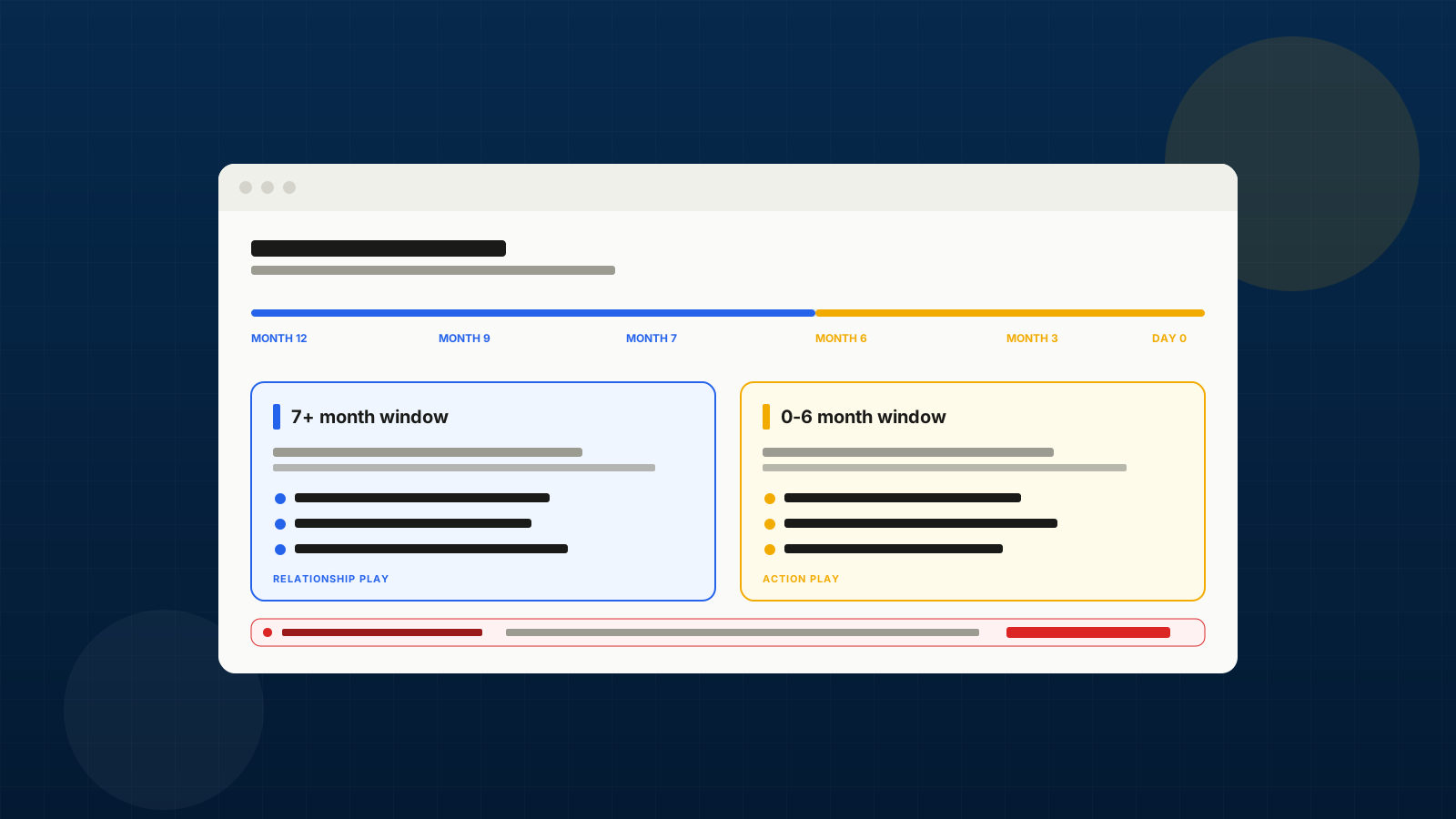
The two renewal windows
Split your renewal universe into two tracks with different playbooks.
The 7-plus month window (the relationship play)
Clients with maturity dates seven or more months out.
The lender’s retention team hasn’t activated yet. The client isn’t thinking about their mortgage. Your window here is about relationship maintenance, education, and pre-positioning.
What to do in this window:
- Annual check-in call or email. “Just wanted to touch base, nothing urgent, anything changed in your situation I should know about?” Low-pressure. The point is being the name they think of when mortgages come up in conversation.
- Rate market education. Brief updates on where rates are and what’s moving them. The kind of content that reminds clients their mortgage broker is paying attention to the market.
- Update their file. Current home value (via AVM or client self-report), any new debt they’ve taken on, any major life changes. The brokers who win renewals have the cleanest client data when the window opens.
What not to do: hard pitches, urgent calls-to-action, renewal offers. The client isn’t ready, and premature pitches read as pressure.
The 0 to 6 month window (the action play)
Clients with maturity dates zero to six months out. This is where the work actually happens.
At six months out, you want to initiate the renewal conversation. At five months, you want to have their current information and be shopping the market. At four months, you want to have quotes ready. At three months, the bank’s retention letter is landing - and you want the client to already have your offer in hand when it does.
What to do in this window:
- Month 6: initiation. Reach out to let the client know their renewal is approaching and you’d like to help them shop it. Confirm current details: current home value, current mortgage balance, any new debts or life changes.
- Month 5: market analysis. Pull current rates across lenders. Run the analysis. Identify the best options for the client’s specific scenario.
- Month 4: quote presentation. Present the client with 2-3 options. Include both the best available new-lender rate and a retention scenario (what their current lender would likely offer). Help them think about it.
- Month 3: close. Lock in the best option. Submit the deal. The client now has a signed renewal before the bank’s letter arrives.
- Month 2-1: execution. Paperwork, closing, transition.
The brokers who work this window well retain 80 percent or more of their book’s renewals. The brokers who wait for the bank to go first retain 40-50 percent.
70-85%
renewal retention rate for Canadian brokers running systematic two-window tracking. Brokers without a system typically retain 40-55 percent.
The monthly maturity email
If you take one operational habit from this post, take this one.
Every month, on the same day, pull a list of every client whose maturity date is in the next 90 days. Send yourself the list. Review it. Act on it.
Most brokers know they should do this. Few do it consistently. The ones who do have measurably better renewal retention than the ones who don’t.
Some specifics:
Pull the list on the first Monday of every month. Not the 15th, not the 28th. The first Monday. Calendar consistency beats ad-hoc effort.
Include every client, even ones you expect to renew with their current lender. You might think the client is locked to their current bank. They might not be. The monthly list includes everyone; you triage from there.
Add a 180-day lookahead column. Clients 6+ months out go into the 7-plus month playbook. Clients under 6 months go into the action playbook.
Track last contact. If you haven’t spoken to a client in more than 12 months and they’re approaching renewal, that’s the highest-priority outreach on your list.
This maturity email can be a manual spreadsheet operation, a CRM report, or automated via a revenue intelligence platform. The mechanism doesn’t matter. The consistency matters.
Why lender retention letters are a lagging signal
We said this already but it’s worth reinforcing. If your first touch on a renewal is after the bank’s letter arrived, you’re already behind.
The retention letter triggers the bank’s whole sequence: a phone call, a rate match, a retention specialist working the file. You’re now the second conversation, competing against a sales rep with retention tools you don’t have access to (the bank can match rate plus waive fees plus extend amortization plus throw in cashback; you can only match rate).
The way to not be the second conversation is to be the first one. Which means being proactive at month 6, not reactive at month 3.
This is the single clearest differentiator between the brokers who win renewals and the ones who lose them. It’s not rate shopping skills. It’s not relationship depth. It’s timing.
How software helps
The manual version of renewal tracking works. It’s also tedious, depends on the broker’s consistency, and breaks down past a few hundred clients.
A revenue intelligence platform like BrokerPlus splits your book automatically into the two renewal windows: clients 0-6 months out flagged for immediate action, clients 7+ months out flagged for relationship touch. The monthly maturity email generates itself. As clients move through the windows, they promote automatically.
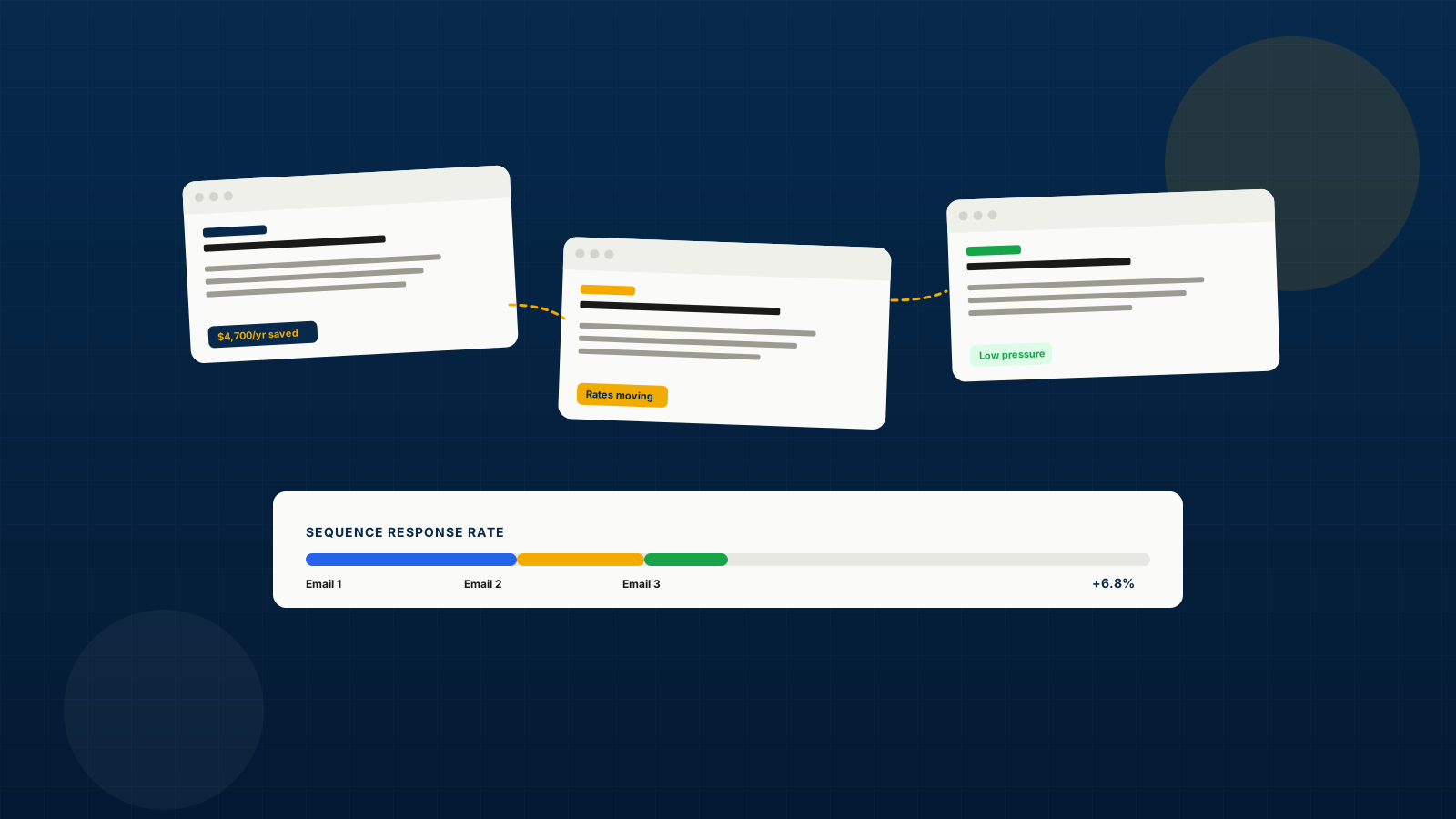
Beyond the tracking, BrokerPlus can automate the initial outreach on 6-month-window clients using your own email address - the first “hey, your renewal is coming up, let’s shop it” email goes out without you needing to remember to send it. Follow-up logic fires if the client doesn’t respond. You get alerted when a client engages, which is the moment to pick up the phone.
For brokerages with multiple agents, the platform aggregates the view so principal brokers can see renewal pipeline across the team, not just individual agent books.
This doesn’t replace the broker’s judgment on any specific renewal. It does replace the work of remembering to check the list, sending the first outreach, and manually tracking which clients engaged. All of which is work that takes the broker away from the conversations that actually close deals.
Frequently asked questions
What’s the benchmark renewal retention rate for Canadian brokers?
Published benchmarks vary. Our observation across Canadian brokerages is that consistent renewal workflow produces 70-85 percent retention, while inconsistent workflow produces 40-55 percent. Brokers at the top of this range are almost always using systematic tracking (either a revenue intelligence platform or a religious manual process). Brokers at the bottom are typically reactive, responding to renewals as they come up rather than managing a pipeline.
When should I contact a client whose mortgage is coming up for renewal?
Start the relationship touch at 7+ months (annual check-in, market updates). Start the action workflow at 6 months (initiation conversation, current details update). Present quotes at 4 months. Close at 3 months. If your first action is later than 4 months, you’re competing against the bank’s retention sequence.
What if the client’s current rate is lower than anything available today?
Then renewal shopping is a formality, but you still want the conversation. The client may have other goals (consolidation, accessing equity, restructuring) that a straight renewal doesn’t serve. The broker who has the conversation is positioned to help with those; the broker who assumes “rates are up, nothing to do” misses them.
How do I handle clients who want to renew with their current lender?
Help them do it, and make sure they understand what they’re signing. Some clients have legitimate reasons to stay put - simplicity, existing relationship, amortization structure they’d have to restart. Your job isn’t to switch everyone; it’s to make sure they’re making an informed decision. If they stay, they stay, and they know you were helpful at renewal - which matters for the next renewal.
Should I send mass renewal-reminder emails to everyone in my book?
No. The personal touch at the right time beats the mass reminder at the wrong time. A revenue intelligence platform can automate the initial outreach on specific clients at specific points in their window - which is personalized at scale - but avoid blasting your whole book.
What about clients who funded less than a year ago?
They’re not renewal candidates yet, but they’re probably in your “new client nurture” category. Different workflow. The renewal tracking system covers clients approaching maturity, not clients recently funded.
How do I keep track of maturity dates if my data is inconsistent?
Cleaning the data is its own project, and worth doing. Most brokers have maturity dates in one or two places (Filogix export, Velocity record, original commitment letter) but not centralized. Import into a CRM or revenue intelligence platform that makes maturity date a first-class field. If the data isn’t there, the renewal tracking doesn’t work.