Most write-ups of Canadian mortgage broker software focus on the big platforms - Finmo, BluMortgage, Velocity. Those pieces are useful if you’re a brokerage evaluating a company-wide stack. They’re less useful if you’re a solo broker or small team running a business where every software subscription has to earn its keep individually.
This guide takes a different approach. We focused on the smaller, cheaper, more targeted tools that solo Canadian mortgage brokers actually use day-to-day. Calculators, property valuation services, compliance screening, document automation, productivity layers. The $20 to $100 per month tools that add up to a real tech stack if you pick the right ones.
We include BrokerPlus because we build it. We’re not the only tool in most categories. Where we have a competitor that’s a better fit for a specific use case, we say so.
The essentials: what every solo broker needs
Before we get into specific products, here’s the functional stack every Canadian solo broker should have covered in some form:
- Deal origination - get the application in, collect documents, submit to lenders.
- Rate and product search - find the right product for the client’s scenario.
- Calculator suite - payment, penalty, affordability, stress test.
- Property valuation - up-to-date home values for HELOC, refinance, and reverse mortgage analysis.
- Compliance screening - FINTRAC-required AML, PEP, and sanctions screening.
- Client communication - email, automation, scheduling.
- Document automation - CRA pulls, credit reports, bank statement verification.
- Book management - a system for surfacing deals in your existing book.
Some of these are handled by big platforms. Many are handled by specialized tools that plug in alongside. Solo brokers often over-invest in a single expensive platform when a mix of smaller tools would serve them better at lower cost.
The tool categories
Deal origination and submission
Finmo (Lendesk) is the dominant origination platform for Canadian brokers. If you only pick one big platform, this is typically the one. Broker-facing application intake, borrower-facing portal, lender submission through Gateway, FINTRAC-ready workflows including digital ID verification built into the deal flow.
Filogix Expert (Finastra) remains the legacy standard and is still used for more than half of broker-channel files in Canada, partly because many lenders still receive submissions this way. If your network uses Filogix, you’ll use Filogix.
Scarlett Network is the free POS platform backed by CENTUM and others. Worth evaluating if you’re independent or looking for a free origination option.
Rate and product search
Lender Spotlight is Canada’s leading lender rate and policy database. 12,000+ policies, 100+ lenders, AI-powered scenario matching. If you’re submitting to more than one or two lenders regularly, this is close to essential.
Mortgage Alliance Portal, DLC Portal, Mortgage Architects Portal, etc. - if you’re in a network, your network’s internal rate tool is your baseline. Lender Spotlight layers on top for broader coverage.
Calculators
Every solo broker needs a reliable calculator stack. The default ones are:
- Mortgage payment calculator - amortization-accurate, Canadian-compounded.
- Prepayment penalty / IRD calculator - ideally lender-specific rather than generic. Covered in detail below.
- Affordability and stress test - running B-20 scenarios for qualification.
- Cost-of-borrowing comparison - comparing offers with different rates, terms, and fees.
Canadian Mortgage App (CMA Pro) is the most widely used Canadian broker calculator app. Used by 23,000+ professionals, it handles the standard calculator set with a clean mobile interface and integrates with your branded client reports.
RateHub calculators and WOWA calculators are consumer-facing but broker-useful for quick checks. Free.
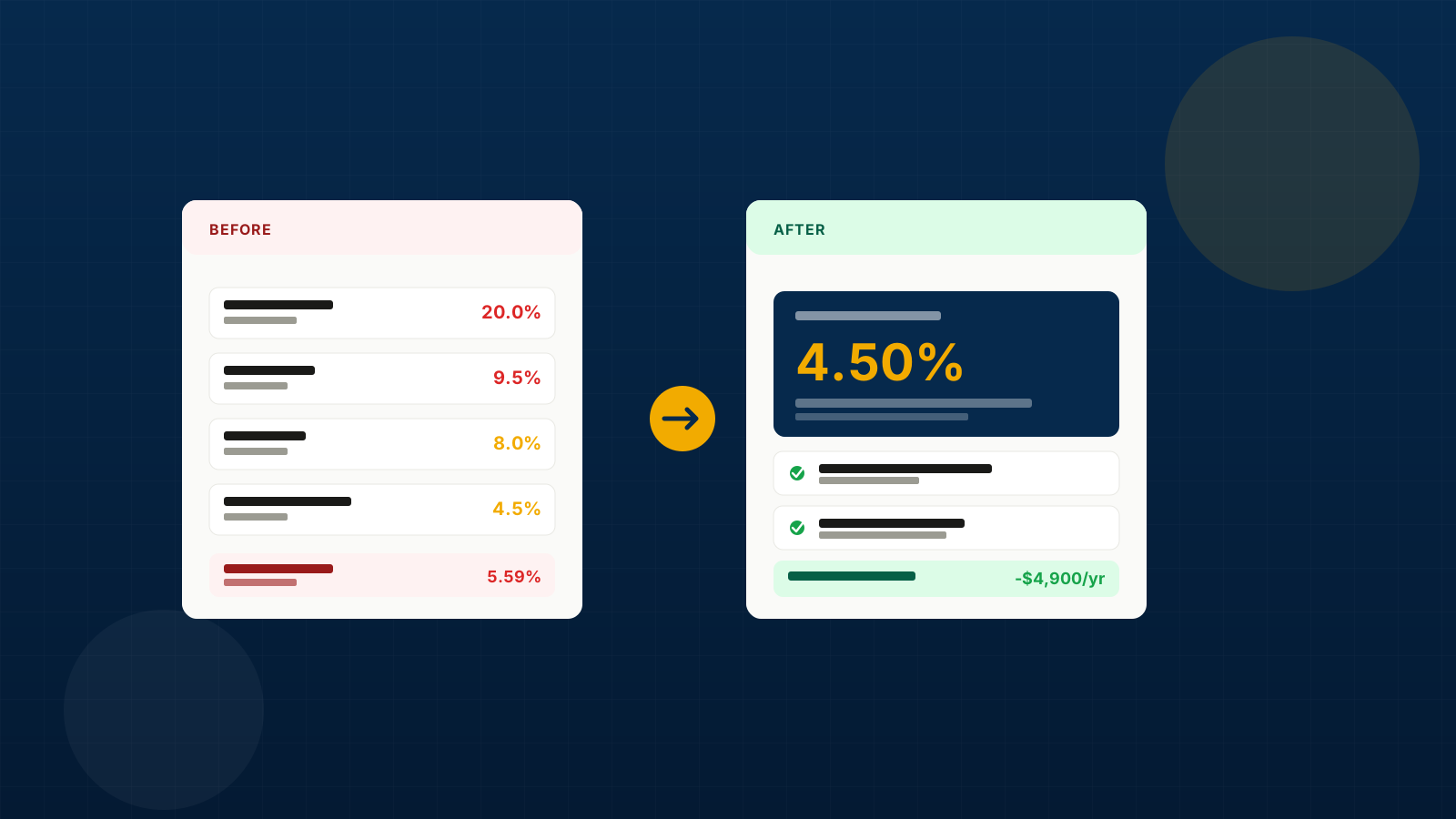
For IRD specifically, consumer-grade calculators produce generic estimates. Broker-grade tools should use lender-specific IRD formulas because each major Canadian lender calculates penalties differently, and the difference on a single file can be $20,000+. BrokerPlus’s standalone IRD calculator is built around this - pick the lender, enter contract rate, balance, remaining term, original discount, and get the penalty at that lender’s specific methodology.
Property valuation (AVM)
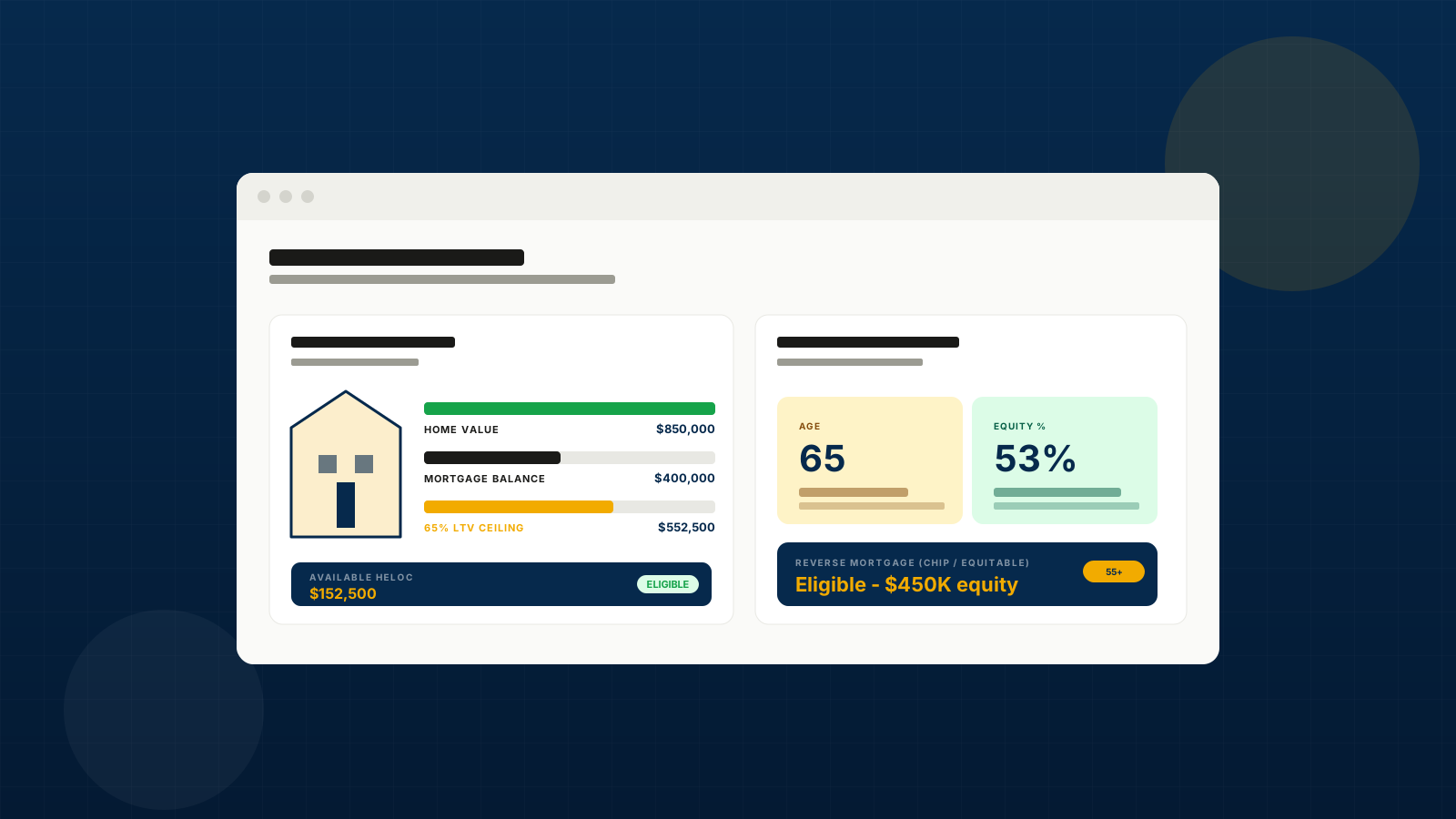
This is the category most solo brokers underuse. Your client’s home value is a moving target, and the value in your database is whatever the client’s home was worth the last time you transacted. For HELOC eligibility, refinance LTV, and reverse mortgage qualification, current value matters.
Houski is the Canadian AVM most commonly used by mortgage brokers. Integrates directly with several broker platforms (including BrokerPlus) for automated property value lookups.
Opta is the incumbent institutional AVM used by lenders, accessible through some broker tools.
Purview (by Teranet) is used primarily for Ontario and specific use cases like title search integration.
For solo brokers, most of the value comes from using any reliable AVM rather than none. Whichever you pick, use it systematically.
Compliance screening (AML, PEP, sanctions)
Post-Bill C-12 this category is operational baseline. Options:
ComplyCube is one of the most common Canadian-compliant screening vendors, offering sanctions, PEP, and adverse media screening with continuous monitoring. Per-screen pricing in the low dollar range.
World-Check (Refinitiv) and Dow Jones Risk Center are enterprise-grade options, expensive for solo brokers but standard at larger brokerages.
Standalone screening via your network or a separate vendor is an option. It’s also more work than integrating screening into your deal workflow.
Finmo has FINTRAC-ready workflows and PEP screening built into the origination flow, which is convenient if you’re already on Finmo.
BrokerPlus integrates sanctions, PEP, and adverse media screening with continuous monitoring, and the first 10 standard screenings per agent are included in the $99/month subscription. For solo brokers who don’t want to manage a separate compliance vendor, this bundles the work into one platform.
Document automation
FastKey handles CRA document retrieval and credit report access for Canadian brokers - a pain point every broker knows well, especially around NOAs and T1 generals.
Plaid and Flinks are the two major open-banking providers for bank statement verification. Both have Canadian coverage; Flinks is more Canadian-focused, Plaid is broader but has a Canadian product.
Equifax broker services for credit reports, with volume-based pricing.
Client communication
Standard tools every solo broker uses: Gmail or Outlook for email, Calendly or TidyCal for scheduling, DocuSign or HelloSign for signing.
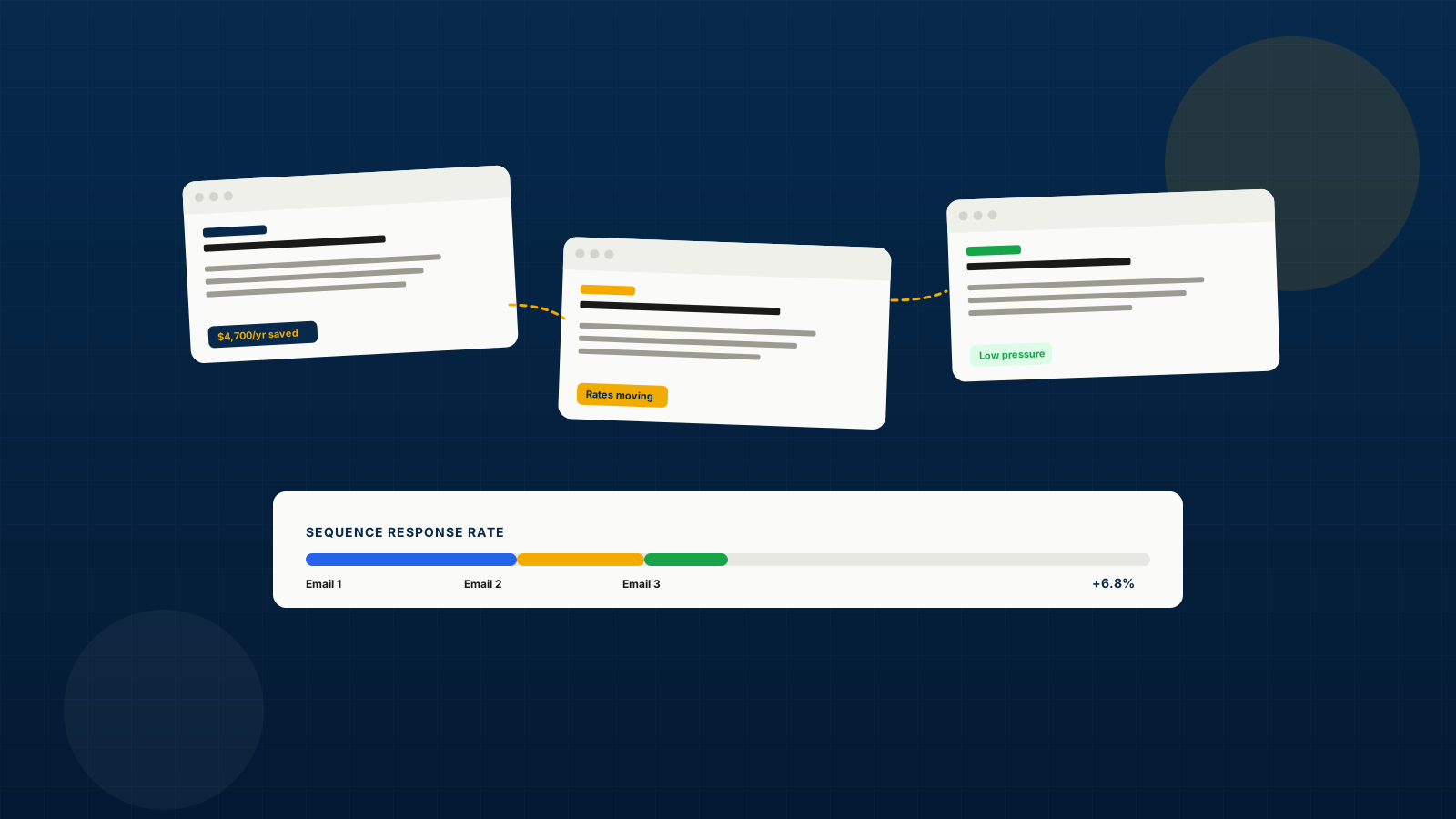
For automated outreach, the question is whether you want your communication branded to you (which BrokerPlus’s outreach engine provides from your own email address) or managed through a marketing automation tool like Mailchimp or HubSpot.
CRMs for solo brokers: BluMortgage is the most mortgage-specific option, My Broker Pro is more affordable and adequate for smaller practices. Brokeredge is a clean simple option.
Book management / revenue intelligence
This is where the tool stack gets interesting for solo brokers with established books.
Ownwell handles the client engagement layer - monthly homeowner reports, Adopt My Mortgage for realtor partner expansion. Pricing starts at $125/month ($100 annual) for 100 clients.
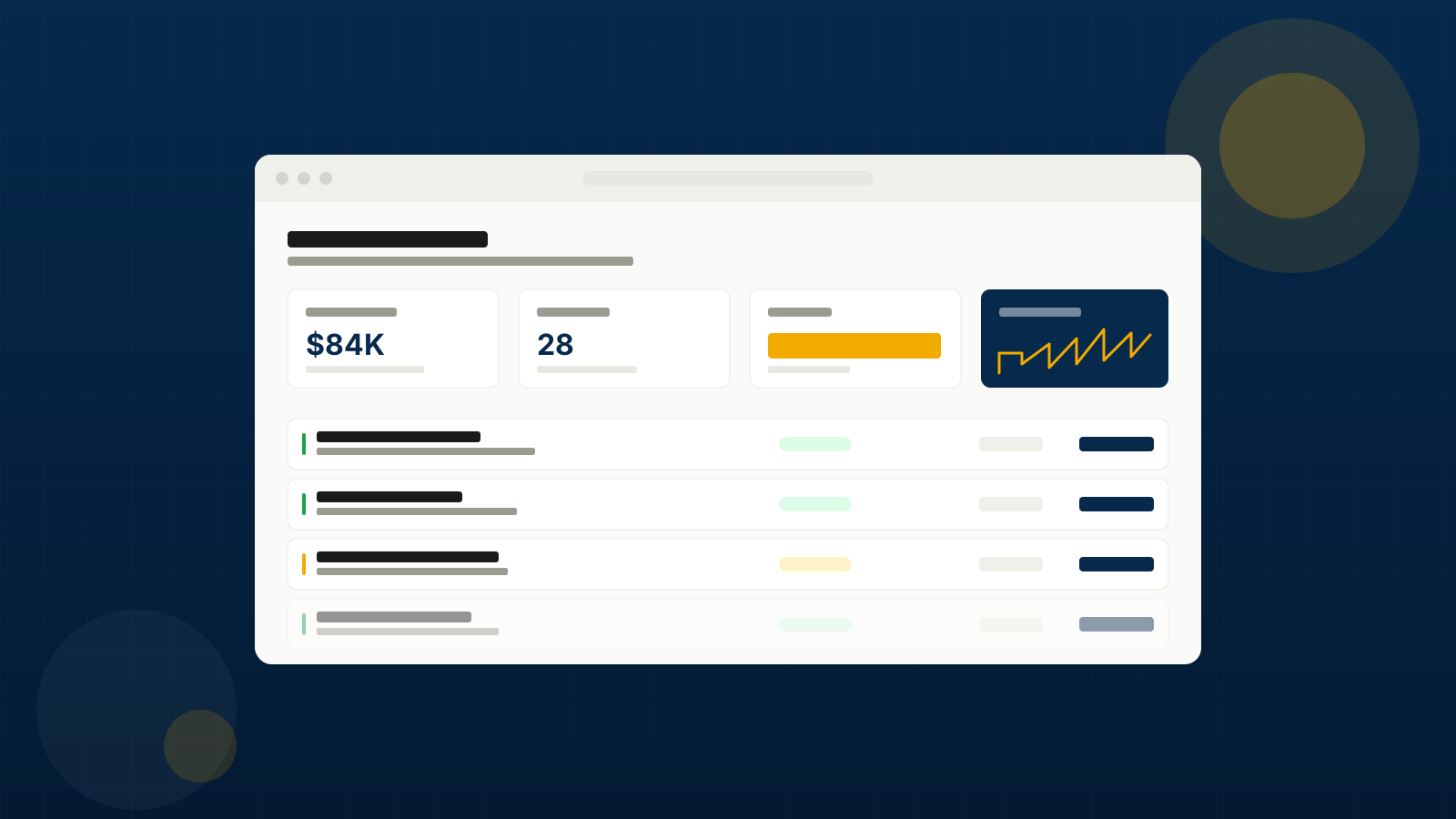
BrokerPlus handles the revenue intelligence layer - scanning your book for refinance, renewal, HELOC, reverse mortgage, and debt consolidation opportunities with lender-specific IRD math. $99/month flat, unlimited book size.
Manual spreadsheet management works for brokers with under 100 clients. Breaks down beyond that.
A recommended stack for a solo broker in 2026
For a typical solo broker with an established book and standard Canadian operations, the minimum viable 2026 stack looks like:
- Origination: Finmo (or Filogix Expert if your network requires it)
- Rate search: Lender Spotlight + your network portal
- Calculators: CMA Pro + a lender-specific IRD tool
- AVM: Houski
- Compliance: bundled into whichever platform handles it (BrokerPlus if you’re using it, Finmo if not)
- Communication: Gmail/Outlook + Calendly + DocuSign
- Book management: BrokerPlus for revenue intelligence, optionally Ownwell for client engagement
$250-$500
typical monthly software spend for an established Canadian solo broker's full stack. Under $250 usually means you're missing something important; over $500 usually means you're paying for enterprise features you don't use.
This is lighter than what a brokerage with 50 agents would run. That’s appropriate. Solo brokers don’t need enterprise compliance tooling or team CRM features. Pay for the jobs you actually need done.
What to avoid
A few patterns we’ve seen from solo brokers that don’t work:
Buying the big all-in-one and paying for features you don’t use. Enterprise platforms are priced for brokerages. A solo broker using 20 percent of the feature set is overpaying.
No compliance screening because “I know my clients.” This was defensible in 2023. After Bill C-12’s effectiveness standard took effect in March 2026, it’s not.
No current AVM. Working from 2020 property values in 2026 is why brokers miss HELOC opportunities on clients whose homes doubled in value.
Generic IRD calculators for refinance analysis. Fine for a rough check. Unreliable for the advice you actually give the client.
Over-investment in tools with low setup and high forgetting. A tool you bought eight months ago and haven’t opened in six is just cost. Cancel it.
Frequently asked questions
What should I pay total for software as a solo broker?
Between $250 and $500 per month is typical for an established Canadian solo broker’s full stack. Under $250 usually means you’re missing something important (AVM, compliance screening, or book management). Over $500 usually means you’re paying for enterprise features you don’t use.
Do I need a CRM if I’m using BrokerPlus?
Depends on your volume. If you’re running 2-5 active deals at a time, a spreadsheet or even a kanban board like Trello is adequate. Past 10 concurrent deals, a dedicated CRM starts paying for itself. BrokerPlus is revenue intelligence and compliance - it doesn’t replace your CRM for active-deal pipeline management.
Which tools are free?
Scarlett Network (free POS). Some calculator apps. Google Workspace is low-cost. Most of the rest are paid, and for good reason - rate data, AVMs, and compliance screening have real operating costs behind them. Watch for “free tier” offerings that get constrained fast, and watch for tools where the free tier is just a funnel to a paid upgrade.
Should I pay annually or monthly?
Monthly until you’ve used the tool for 60-90 days and confirmed it fits. Then annual for anything you’re committed to - the typical discount is 10-20 percent, which matters across a stack of 5-10 tools. Don’t pay annually on day one, even for a discount.
What’s the difference between BrokerPlus and a calculator?
A calculator does one thing on one file at a time. BrokerPlus does lender-specific IRD math across your entire book simultaneously, ranks every opportunity by dollar value, automates the outreach, and integrates FINTRAC screening. Different categories of tool. The standalone IRD calculator inside BrokerPlus is a subset of what the platform does; it’s there for one-off client questions that don’t require a full book scan.
How do I evaluate a new tool without wasting months?
Import your actual data, run your actual workflow, measure whether it produced actual results within 30-60 days. Most tools either earn their place quickly or they don’t. Don’t run a six-month evaluation - if it’s not delivering by day 45, it won’t start at day 180.
Is there a tool I should add in 2026 that wasn’t needed in 2024?
Compliance screening. Bill C-12 moved it from optional to essential. If your stack doesn’t include continuous AML, PEP, and sanctions screening, that’s the highest-priority gap to close this year.